
Scarred, But Still Beautiful: Healing After Face Trauma and Embracing Aging Gracefully

Minutes before my bike accident.
My Face Changed in an Instant
Last summer, in the Colorado Rockies, my world changed.
An ordinary bike ride turned into a life-altering moment when I miscalculated how close I was to my husband’s handlebars. I hit the ground hard – chin first – and blood oozing, what felt like everywhere. My husband quickly called 9-1-1, blood on my face and fear in my heart. In the emergency room, I learned I’d need stitches for my chin, had a broken jaw, tooth trauma, and road rash on my face and hands. The physical wounds would heal, but I knew a deeper journey lay ahead.
In that split second, I became an aging woman with facial scars, navigating a society that often sees women and appearance through a harsh, unforgiving lens. Little did I know this accident would spark a profound exploration of healing after trauma – of identity, self-worth, and the very definition of beauty.
Of course, I was told I was lucky (falling on your head can yield paralysis or even death), but that didn’t give me much comfort as I knew I had a long healing journey in front of me.
I remember the first time I looked in the mirror after the accident. Stitches crossed my swollen chin, while road rash took up the majority of my face. My reflection was a stranger – vulnerable, marked, and mortal.
Midlife had already been whispering its changes (a new crease here, a silver hair there), but now scars screamed a story I wasn’t ready to tell. Would I ever feel beautiful again? In that moment, I grieved: not only for the face I had before, but for the confidence that seemed to vanish overnight.
This was the beginning of a heartfelt journey – one of pain and perseverance, but ultimately of growth, self-acceptance after injury, and discovering that the woman in the mirror is so much more than her scars.
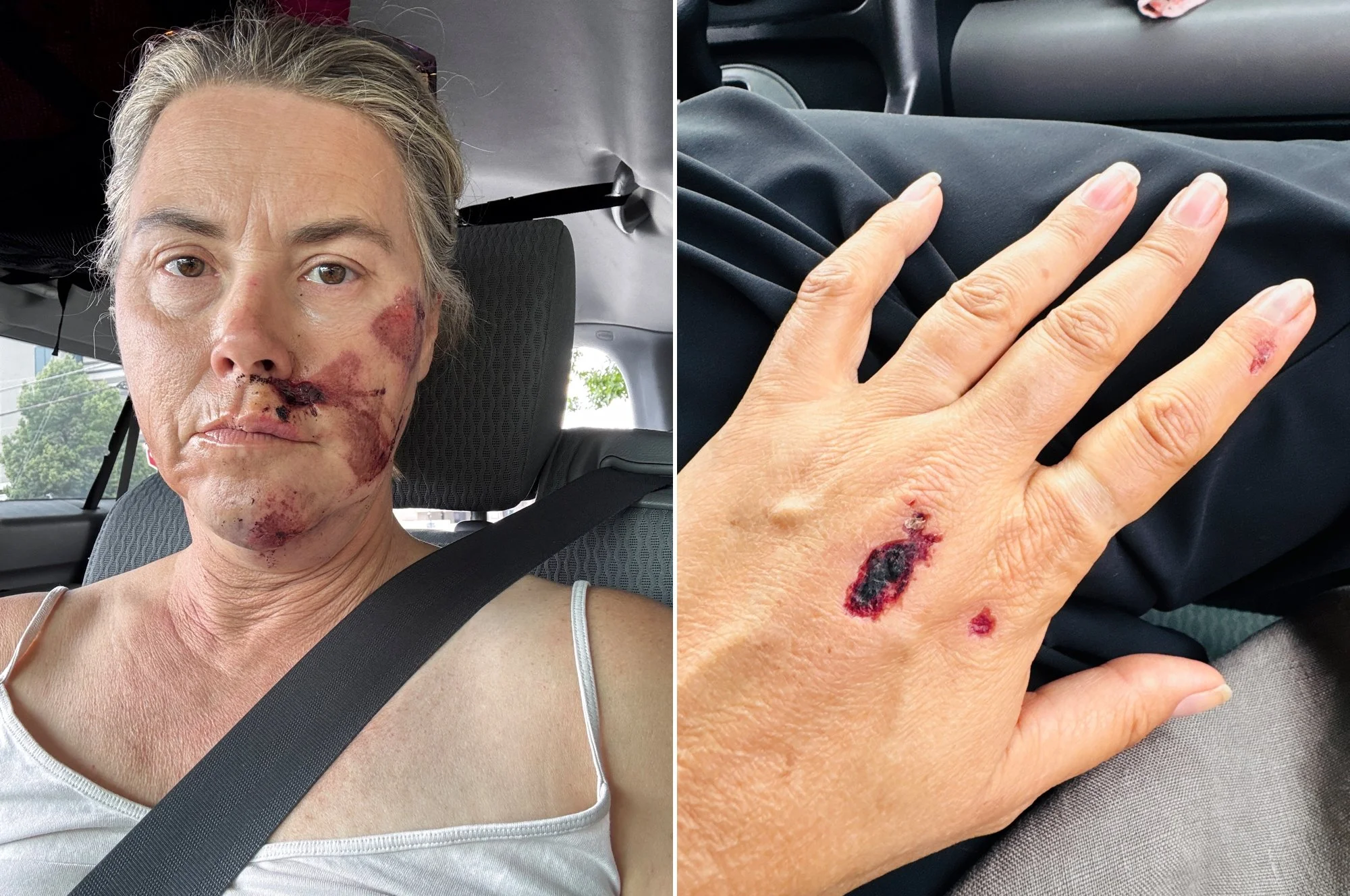
In the weeks that followed, physical recovery was slow and humbling. My son came to help take care of me, and he brought me his cold. My energy was all consumed with healing, and I could only eat baby food. The stitches finally dissolved, leaving a jagged line on my chin – a permanent emblem of that accident. Beyond the physical jaw aches and barely being able to open my mouth, something inside me ached more. I had always told other women (as a photographer who celebrates aging and beauty) that they were gorgeous exactly as they are. Now, confronted with my own visibly scarred face, I struggled to extend that compassion to myself.
Facing the Mirror: The Emotional Impact of Facial Scars in Midlife
Standing before the mirror with my new scars, I felt a surge of insecurity I hadn’t known since adolescence. It’s ironic – by midlife, you think you’ve outgrown that anxious girl inside who scrutinizes every flaw. I wish I could tell you I accepted my scar as a badge of survival from day one, but the truth is I battled embarrassment and a sense of loss.
Society doesn’t prepare women to feel beautiful with a facial scar. We live in a culture where a wrinkle or blemish is “to be fixed,” so a scar felt like a glaring spotlight on imperfection. I found myself instinctively tilting my head a certain way, covering my chin in photos, and avoiding eye contact in the grocery store line. The internal impact of that injury was immense – a hit to my confidence that echoed, “You’re not the same. You might never be seen as attractive again.”
I was not alone in these feelings. Studies show that for many people, scars can trigger anxiety, shame, and diminished self-worth. In fact, 72% of people with visible scars or skin conditions say it affects their confidence, and facial scars in particular have been proven to increase self-consciousness. Knowing this brought me some comfort: my reaction was a human one, not a vain obsession. I had to learn that healing after trauma isn’t just about the skin knitting back together; it’s about tending to the bruises on your soul.

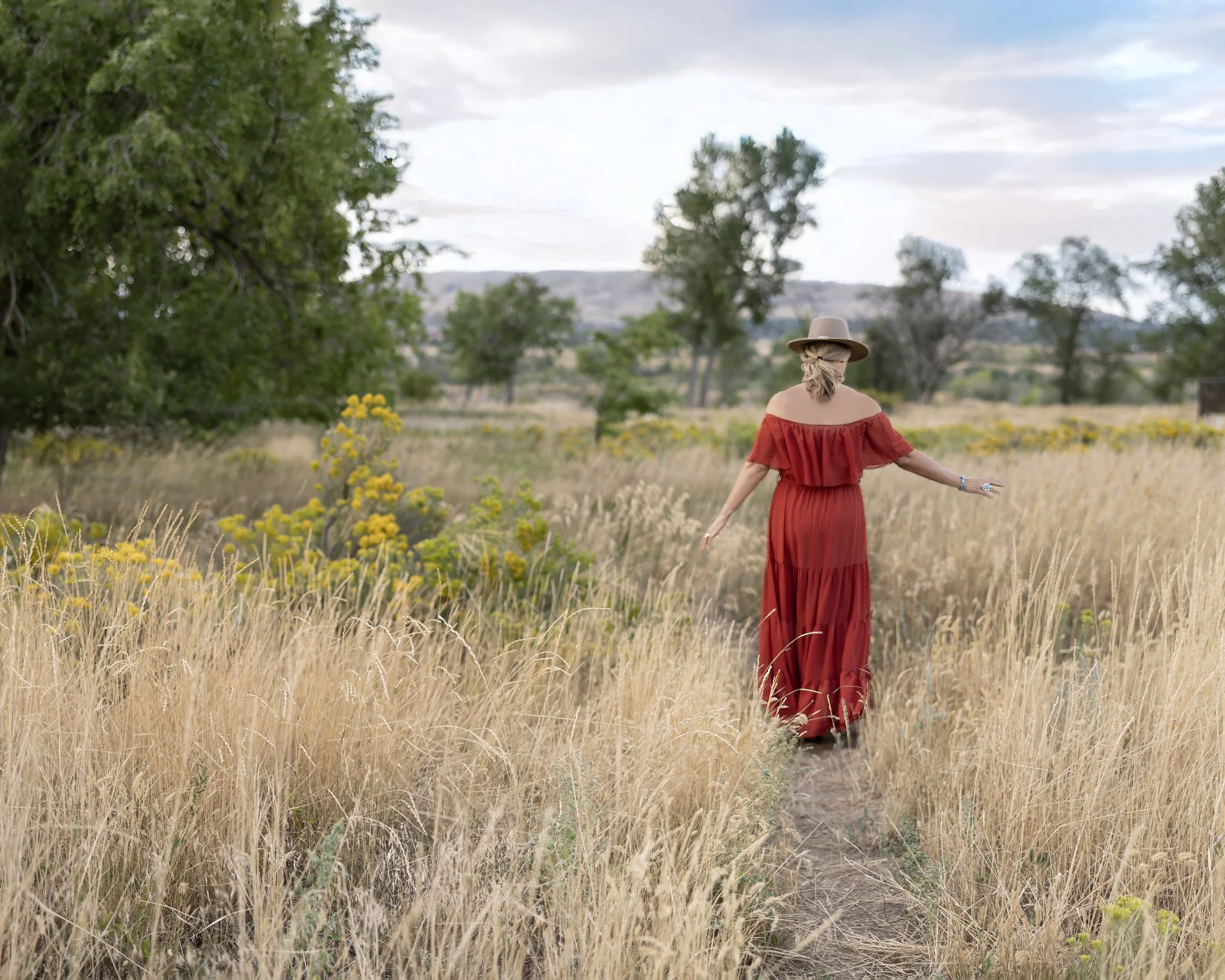
I didn’t know how much to be grateful for in this portrait taken 3 months before my accident. We take what we have for granted.
Physically, even the best medical care can only do so much. Doctors mended me with skill, but even a relatively minor facial injury can leave lasting marks – a reminder of that day etched into my skin. Each time I tended to my scars, I had a choice: view them as an ugly flaw or as proof that I survived. In those early weeks, I often fell into despair over that choice. I remember whispering to myself, “It’s permanent.” The word permanent rang like a life sentence. I feared that when others looked at me, the scar was all they’d see – erasing the rest of me.
Beyond my personal turmoil, there was the external impact: how others responded. Most people were kind; family and friends said, “I don’t even notice it!” or “You’re beautiful, scar and all.” But I noticed their sympathetic eyes linger a second too long. Strangers occasionally asked, “Oh, what happened?” and I would relive the story in a few awkward sentences, then change the subject. I even encountered silence – the kind where someone’s gaze flickers over your scars and quickly away, as if not looking will pretend it isn’t there. Each reaction, even well-intentioned, reminded me that society isn’t used to seeing women wear their wounds openly. Especially not women in midlife, who are expected to be fighting off age, not dealing with visible imperfections like a jagged line across the face.
I took this self-portrait in mid-September. I wasn’t ready to face the camera.
The Weight of Perfection: Societal Pressure on Women’s Appearance
My experience illuminated a harsh truth: we live in a society obsessed with perfection and youth, and it places that burden heaviest on women. As I grappled with my scars, I also felt anger. Why should a few inches of healed skin make me feel unworthy? The answer lies in our culture’s relentless messaging. Scars are often stigmatized in a world that puts a premium on being flawless. From magazine covers to Instagram feeds, we’re fed a steady diet of airbrushed perfection. Women, especially, learn from a young age that our value is tied to looking youthful and unblemished. When we deviate from that narrow norm – by aging, or having scars, or simply by looking real – we’re made to feel “less than.”
Think about it: how often do you see women with wrinkles, grey hair, or scars represented in media as confident and desirable? The answer is rarely. Nearly 7 in 10 women over 50 say they “rarely” or “never” see women who look like them in media. Instead, the images of beauty we consume are almost always young, smooth-skinned, and unblemished. This absence sends a powerful message that older women – and certainly those of us with visible “flaws” like scars – are invisible. It’s no wonder that after my accident, I felt a creeping shame, as if I needed to apologize for my face. I had absorbed the lie that a woman’s face must be perfect to be worthy of love, success, or even a photograph.
The double standard of aging only adds to this weight. Culturally, men are often allowed to age gracefully (even being called “distinguished” as their hair grays and wrinkles set in) while women frantically fight the clock. Research and countless lived experiences show that women face pressure to maintain a youthful appearance at every stage of life. In contrast, men’s aging is more often celebrated for bringing wisdom. In other words, a few laugh lines might make a man look “seasoned,” but a woman the same age is told she looks “tired” or “old.” We, women, internalize this unfair standard, feeling that we must erase any evidence of the years we’ve lived. Now add a facial scar to the mix – a mark that society views as an “imperfection” – and the stigma compounds. Scars have long been portrayed in media as something to hide or fix, even used as shorthand for villains or tragic figures. Subtly and overtly, we’re taught that a woman’s worth is tied to her appearance, and anything that mars that appearance diminishes her value.
Living through this, I found myself at the crossroads of multiple societal biases: ageism (the idea that aging makes you less relevant or attractive) and lookism (the idea that beauty means flawlessness). It felt brutally unfair that surviving an accident – something that should be a testament to strength – had become a source of embarrassment. But recognizing this unfairness became a turning point for me. I realized that the real villain of my story wasn’t my scar or even aging itself – it was the culture of perfection that had trained me to believe I am less beautiful now. And once I saw that, I decided I wouldn’t let that culture win.
Reclaiming Beauty: From Self-Conscious to Self-Acceptance
Recovery, I learned, is as much an emotional journey as a physical one. As my bruises faded and I slowly eased back into daily life (even back onto my bike, with a pounding heart and renewed caution), I turned inward to heal the deeper wounds. I knew I had a choice to make: either keep hiding my scar and counting it as a defect, or reclaim my narrative and see it as part of my evolving story. I began to practice something I’ve always preached to my photography clients – self-compassion. I remembered how I’d tell the women I photograph that their laugh lines, freckles, and quirks make them uniquely beautiful. Wasn’t it time I told myself the same, scar and all?
It didn’t happen overnight, but day by day, I worked on changing my perspective. Whenever that internal critic sneered, “You’re face is messed up!,” I countered with, “I’m scarred and beautiful.” I would trace my scars and gently say out loud, “This is proof I survived. This line means I’m alive.” There’s a quote I love: “Scars are a testament to what you’ve overcome.” I started to see my scars not as a disfigurement but as a medal of sorts – evidence of resilience, of a chapter in my life where I was tested and I grew stronger. It helped to recall that people have always found meaning in their scars, seeing them as symbols of strength rather than blemishes. Why should I treat mine any differently?
I also found solace in storytelling. I opened up to other women about my struggles, and in return, many shared their own battles with appearance and aging. Some had scars from flying over the handlebars of their bikes, too. Others bore invisible scars of emotional trauma that nonetheless made them feel “ugly” in their own eyes. In these conversations, a powerful truth emerged: every woman, if she lives long enough and fully enough, will collect a few scars. They might not all show on the outside, but they shape us. And rather than seeing them as imperfections, we can choose to see them as the exquisite embroidery on the fabric of our lives – each stitch a story, a lesson, a triumph.
My self-acceptance after injury truly blossomed the day I did a photoshoot of myself. As a photographer, I’m much more comfortable behind the lens, helping others shine. But I set up my camera, took a deep breath, and turned it toward me. I wanted to document this moment of my life openly. In the resulting photos, I saw a woman with kind eyes, a soft smile, and yes – scars on her face catching the light. Instead of zeroing in on the scar with disappointment, I saw the whole image. I saw me. A woman who has lived, who has laughed and cried, who has fallen and gotten back up. A woman in midlife who carries on her face the traces of aging and beauty intertwined – wrinkles from years of laughter and worry, a scar from one fateful accident, and an inner light that no trauma could extinguish.
Hitting that camera shutter was like breaking a spell. I printed one of those portraits and placed it where I dress each morning. It’s not vanity; it’s a reminder. When I look at it, I don’t think “flawed.” I think “fierce.” I see confidence returning to that woman’s posture. I see acceptance in her eyes. The scar is still there, but its power to define her is gone.

I’m a big fan of self-portraits because I heal a little more each time.
Embracing Our Evolving Beauty
Healing, in the end, has been about embracing wholeness. I am not the woman I was at 20, or 30 – and I don’t want to be. My face tells the story of a life lived: the tiny crinkles at the corners of my eyes from years of smiles, the silver strands in my hair that glitter like tinsel, the scar that whispers “she endured.” There is a profound liberation in realizing that beauty and aging are not opposites. Aging is a gift – denied to many – and with it comes an evolution of beauty. My scar taught me this: true beauty is not the absence of blemishes, but the presence of spirit.
We all carry scars, whether on our skin or in our hearts. And every scar is a reminder that something tried to hurt us, but we endured. For anyone reading this, especially my fellow women navigating the tightrope of midlife in a youth-obsessed world, I want you to know: you are allowed to own every part of your story. Every line, every scar, every “imperfection” is yours, and it is worthy of love. The societal ideals that made us feel less worthy are just stories – and we can reject them. As one powerful movement in the beauty industry now proclaims, people are increasingly rejecting filtered perfection and seeking realness instead, viewing these so-called “flaws” as interesting, individual, and part of our unique. I choose to stand with that movement.
In sharing my story, I hope to inspire a gentle revolution in how we see ourselves. Let’s tell the truth gently but boldly: we are more than our scars, more than our age, and more than any societal standard of beauty. Our worth runs so much deeper. If you are healing from trauma – physical, emotional, or both – remember that healing is not a straight line, and it’s okay to have moments of doubt. But also remember that within you is a well of resilience. You can find the poetry in your pain and transform it into power.
So here’s to our evolving faces and bodies, marked by time and trials, and here’s to the unyielding light within us. May we all continue to age, to heal, and to show the world that beauty lives here, in every line, every scar, and every courageous smile we choose to share.
In the end, my camera has captured me in all my truth: scarred but still beautiful, aging but no less impressive. And I wouldn’t trade this hard-won self-acceptance for any flawless youth. Here’s to embracing ourselves – boldly, tenderly, wholly – at every age, in every phase, come what may.
Takeaway Personal Reflection: Your scars (visible or invisible) and your years are integral chapters of your life story. Don’t let a perfection-obsessed society tell you they diminish you. Instead, let them deepen you. Embrace your evolving beauty and humanity with confidence. You have nothing to hide – you have a life to celebrate. Remember, you are scarred, and you are beautiful. You are aging, and you are ageless in worth. Let your inner light shine, and it will outshine any scar or wrinkle, every time.

And I’m back to biking. I found it’s vital to my mental health. You can see my chipped tooth in this picture that I’ve since had fixed.