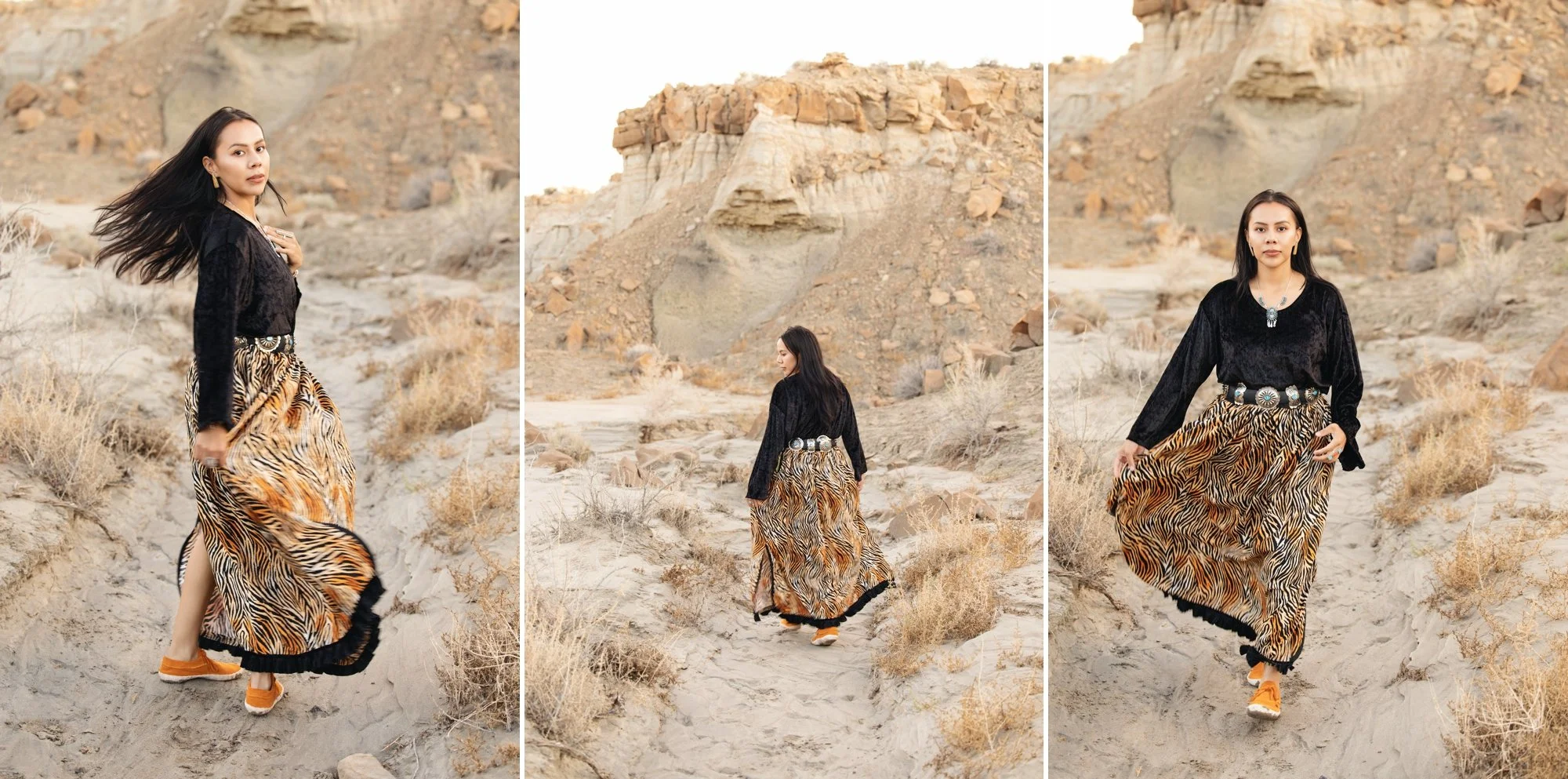
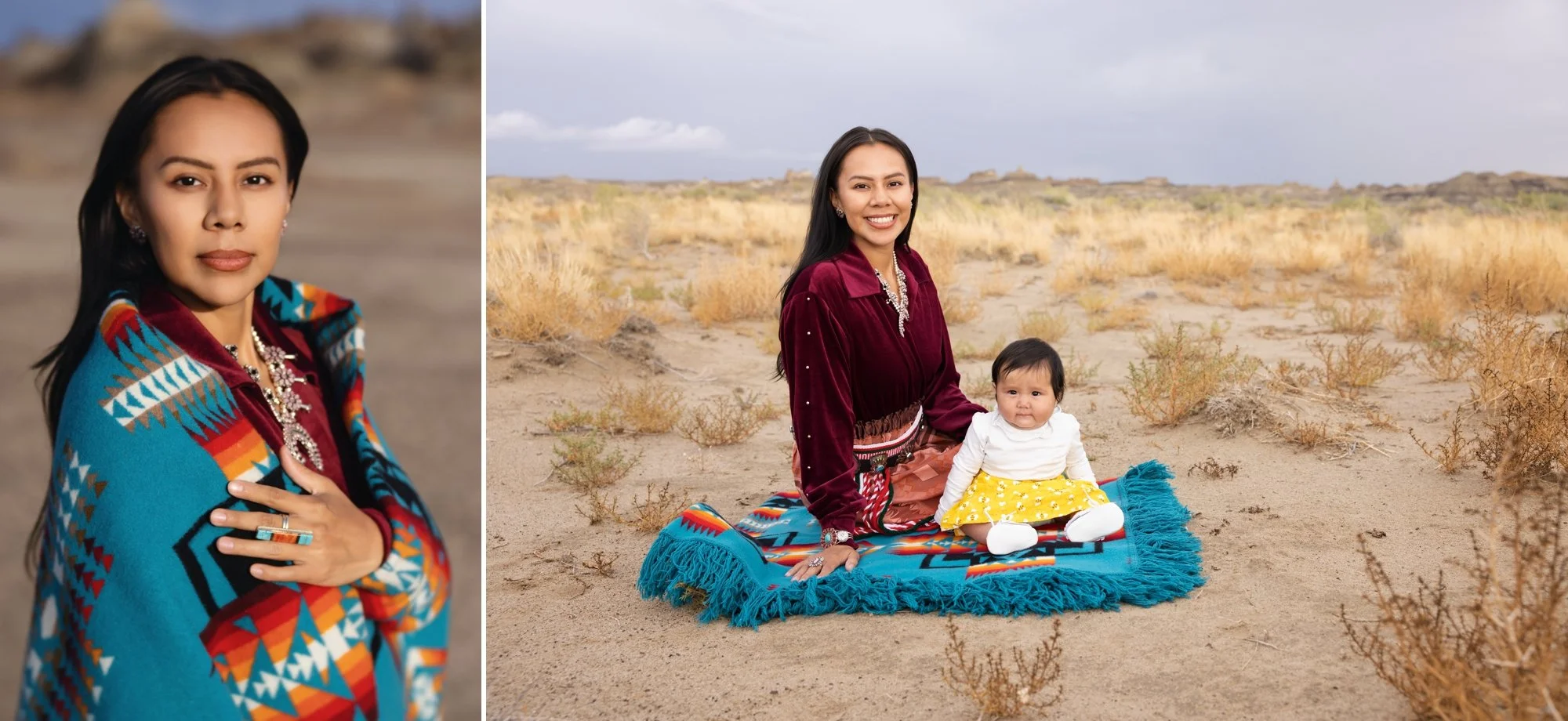
My First Portrait of a Navajo Woman in a Series, at the Bisti Badlands, New Mexico

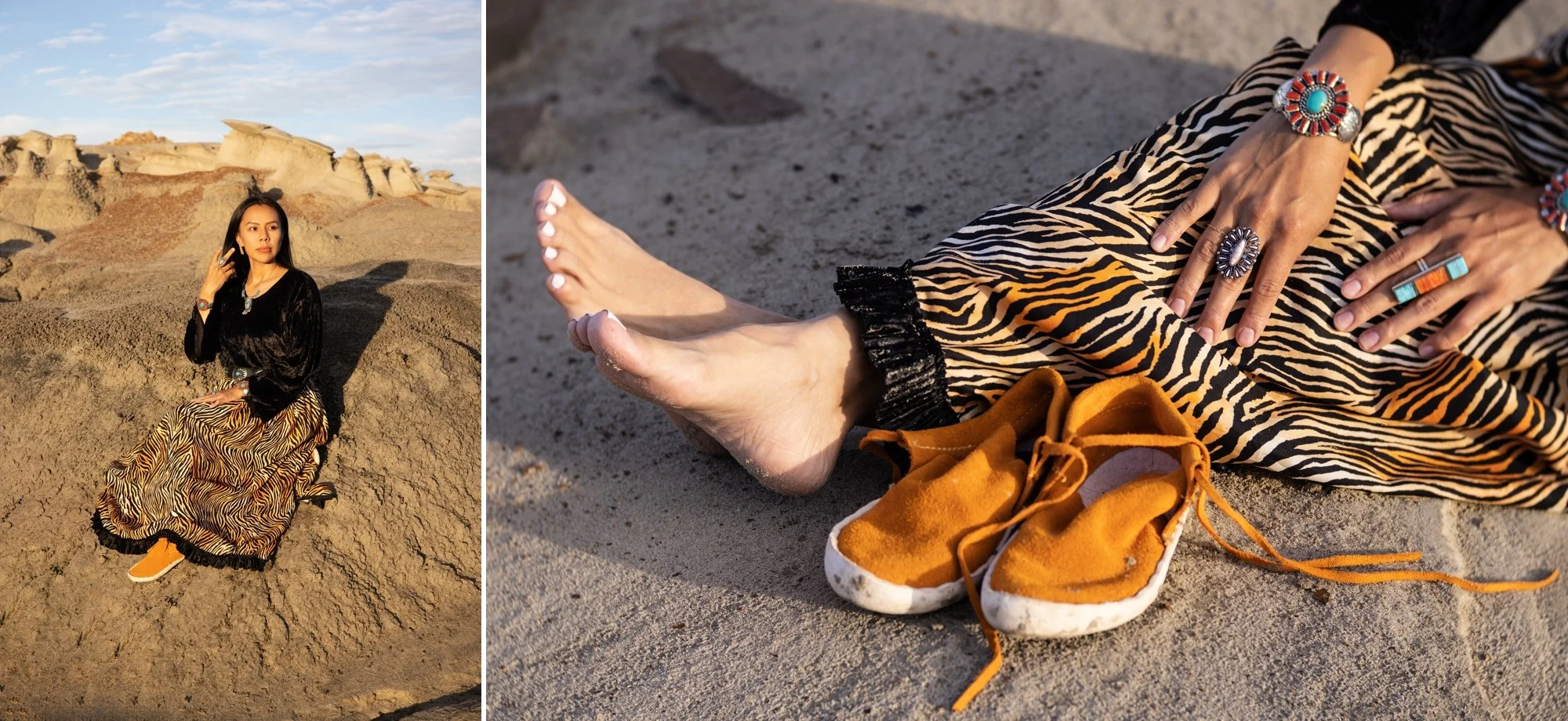
Tiana, Bisti/De-Na-Zin Wilderness, New Mexico, September 2025. Photographed at the Batwing Hoodoos, which she chose.
This was the first session of the Diné Women Series at the Bisti/De-Na-Zin Wilderness in New Mexico in September 2025.
---
A note on how this work is made: Tiana holds final approval over every image from this session. Nothing appears here, in an exhibition, or in a print without her consent, and she can ask for any image to be withdrawn at any time. If any proceeds are made from the images, they go to Tiana.
We walked about a mile into the Bisti Badlands under a light rain, starting by crossing a barbed-wire fence. Tiana's family came with us: her five-month-old daughter, her two-year-old son, her husband, her mother, and her sister. My husband Jeff carried equipment and shot behind-the-scenes footage. We crossed dried river ravines, scrambling down and up the edges with the gear, stopping often to rest, to photograph, to look at the hoodoos.
The small stones underfoot were petrified wood.
Tiana brought two outfits. She wore a sheep skirt with a squash blossom necklace, and told me sheep are important to her.
The Batwings
The light was split and uneven when we reached the Batwing Hoodoos, and I wasn't finding the frame. Tiana was the one who suggested climbing higher, into the formations themselves.
I want to be accurate about that, because it matters to how these pictures exist: the strongest images from this session came from her idea, not mine. I asked her to take on the shape of the rock around her, and she did, and the resulting frames are the ones I keep returning to.
What I am and am not doing here
Photographs of Navajo women in traditional dress against dramatic Southwestern landscape sit inside a long and troubled history. Edward Curtis made those types of images, and they have been reproduced on calendars and postcards for a century. It flattened living people into symbols of a vanishing past. I am not outside that history when I raise a camera in Monument Valley or the Bisti Badlands; the visual vocabulary is the same, and saying otherwise would be a convenience to me.
What I can do is change who controls the picture. Tiana chose what she wore and what she brought. She chose where we climbed. She decides what publishes. Those are not adjustments to a genre; they are the difference between being photographed and being represented.
I am not Diné, and I am not speaking for Diné people or explaining a culture that is not mine. When cultural detail appears in this project, it is because someone chose to share it with me and agreed to my repeating it. [ADD: name your cultural reviewer here if you engage one — it's evidence, not a disclaimer.]
Why this project
My work has long centered on women's self-representation. The Navajo Nation is matrilineal, where land and lineage pass through women, and I wanted to understand what that looks like in daily life rather than in the abstract.
That's the honest version. I don't yet know what this series becomes, and I'd rather say that than claim a thesis I haven't earned.
Deep Gratitude
Thank you to Tiana and to her family for walking that mile with a baby and a toddler.