
Photographing Chucki Begay: A Diné Rocker, Grandmother, and Keeper of Legacy
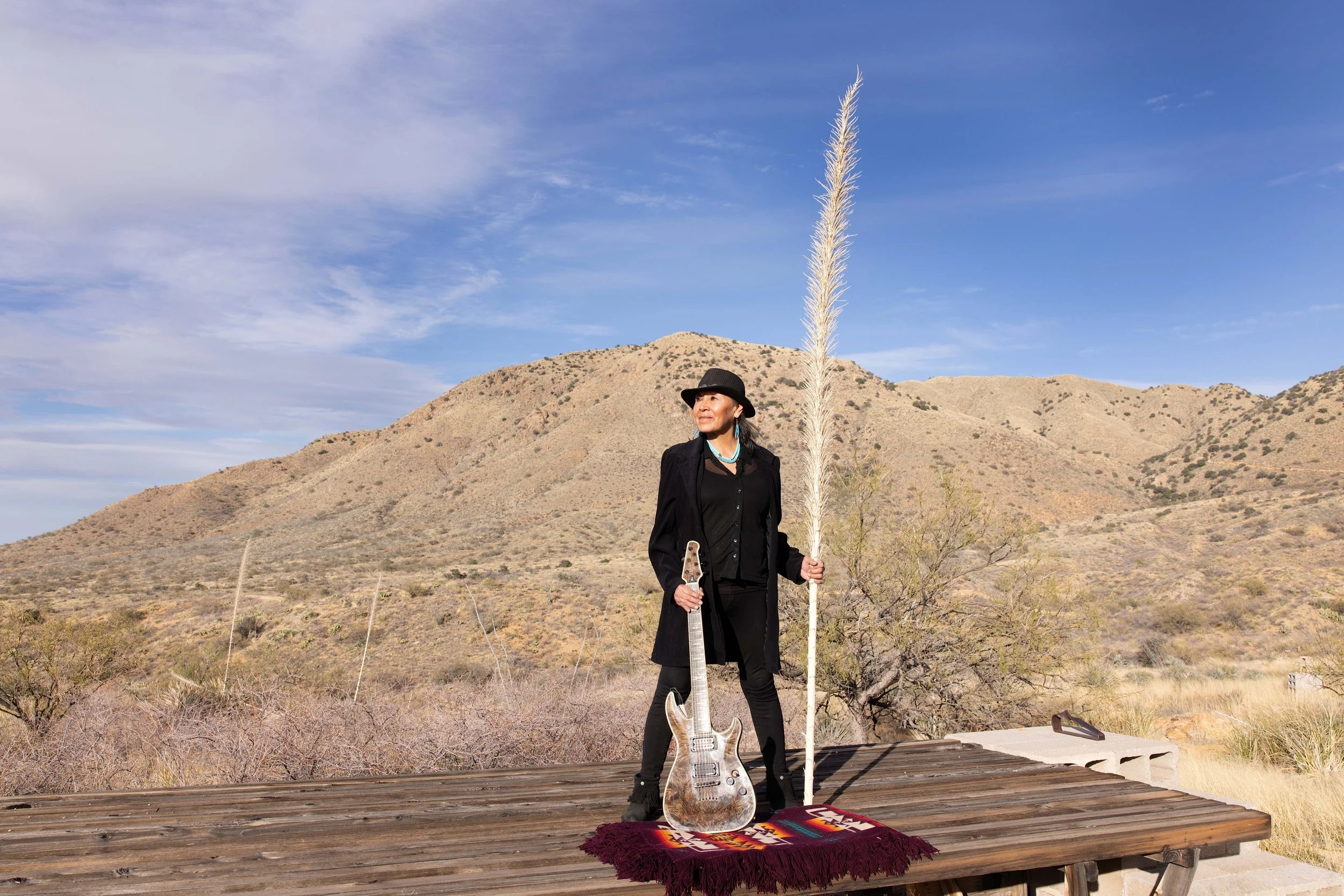
Charlene ‘Chucki’ Begay stands proudly with her guitar and a Dasylirion Wheeler stalk, symbolizing resilience, thriving in hardship, and nourishing the community. This is everything that Chucki represents.
During my artist residency in Tucson, I had the honor of photographing Chucki for my Diné Women Empowerment Series.
Charlene ‘Chucki’ Begay is 68 years old ), she is Diné (Towering House clan, born for Red Streak in Water clan). She is a singer, songwriter, and musician who leads the band Sonoran Reign. Her granddaughter Jasmine ‘Jaz’, who is also Diné (belonging to Towering House clan, born for Mexica), plays alongside her. Three generations standing shoulder to shoulder in music. They live in Tucson, Arizona. There aren’t many Navajo locally, but Chucki moved to Tucson to raise her three grandchildren after her daughter passed away. She proudly has three children and eight grandchildren.
Even within a matrilineal society, women still navigate male-dominated spaces, especially in rock culture. Chucki has claimed her place with strength. She plays both Classic Rock and Indigenous Rock, carrying her heritage with her onto every stage.
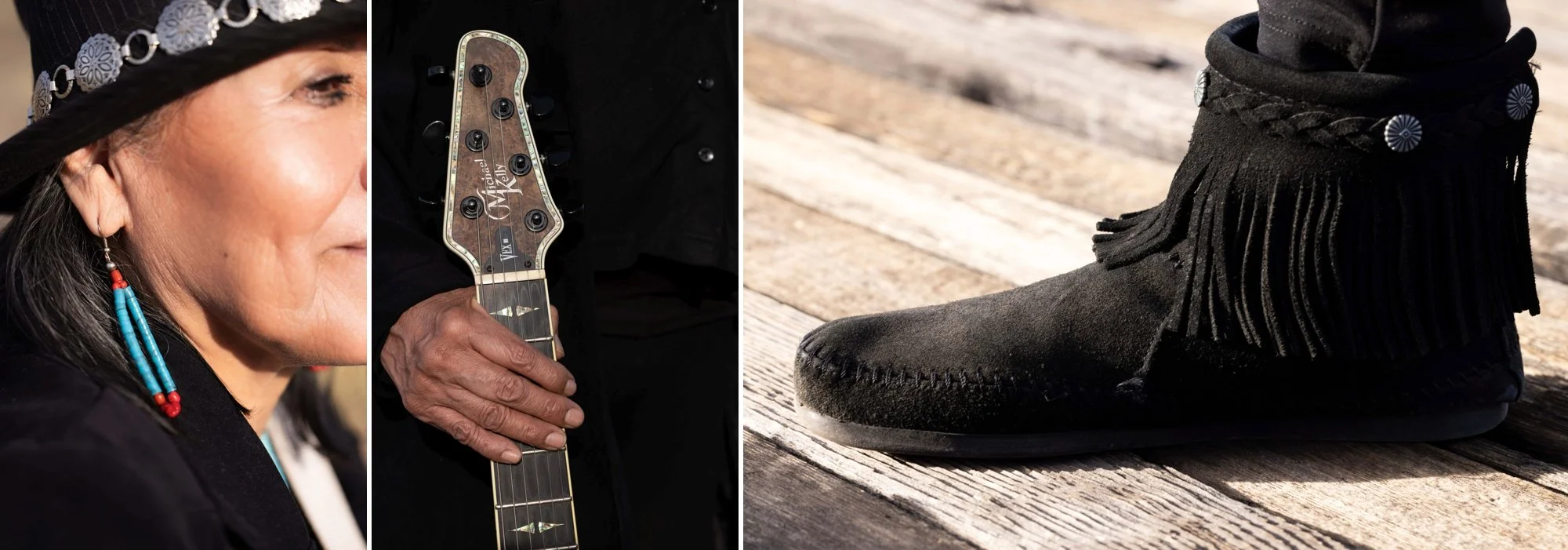
Chucki likes to wear her moscasins when she performs.
We met at a local cafe as a central meeting place before heading to the Land with No Name. I remember noticing how much trust it required for them to follow Jeff and me out there as you feel like you’re in the middle of nowhere. That trust humbled me.
Chucki brought multiple outfits. Her rock look. Her traditional dress. The turquoise she wore was given to her by her grandmother and will one day belong to Jaz. In Diné culture, turquoise is not simply jewelry. It represents protection, connection to the earth, and continuity across generations.
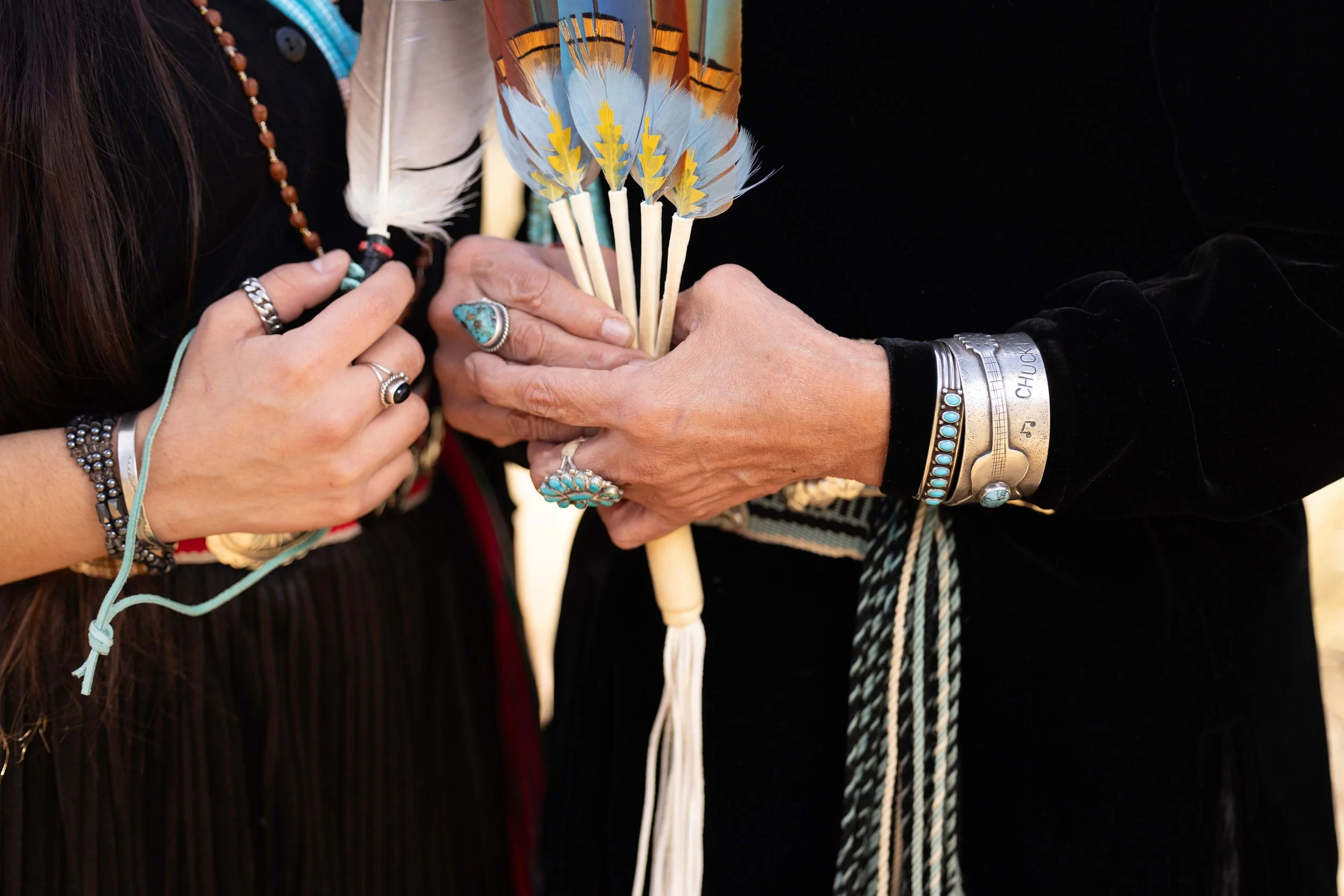
Jaz and Chucki close up, holding their feathers.
Chucki held Macaw feathers that came from South America. The fan itself was gifted to her by a Shawnee woman from North Carolina. Chucki shared with me that Indigenous people of the Americas all share similar histories, beliefs and values. Indigenous people say ‘were all related.’ It reminded me how often Western culture forgets its relationship to land and lineage.
Chucki once lived near the Grand Canyon in Gray Mountain, AZ, before her family was relocated to New Mexico. Throughout the twentieth century, many Diné families experienced federal relocation policies that moved them away from ancestral lands in the name of economic development or resource extraction.
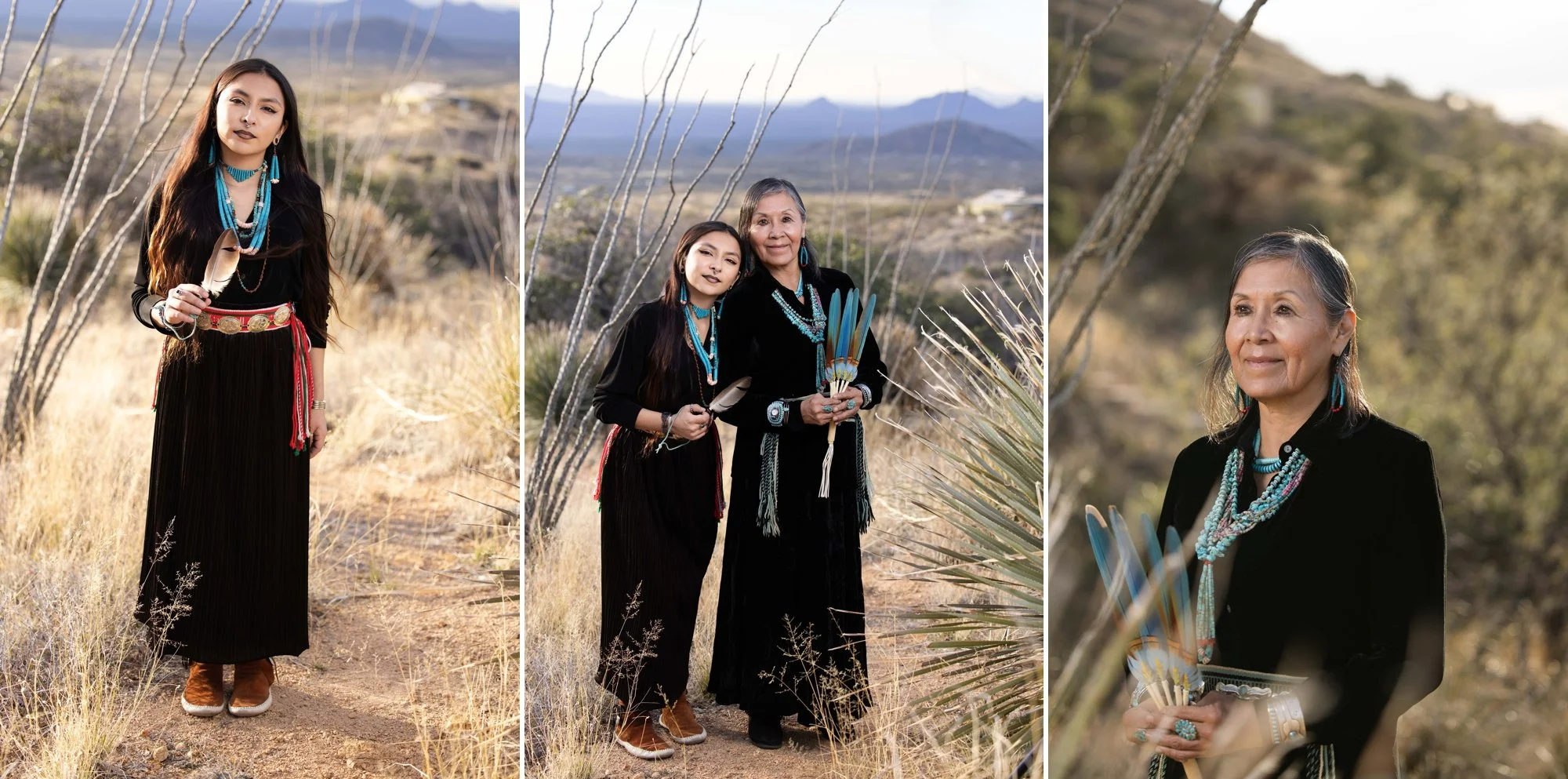
The land is very much a part of their life and the secondary subject in my portraits. Chucki shared that it is a reciprocal relationship: They take care of the land, and the land takes care of them
Earlier still, in 1864, thousands of Diné people were forcibly removed by the U.S. military and made to march hundreds of miles to Bosque Redondo, NM, in what is known as the Long Walk. Many died along the way due to starvation, exposure, and violence. After several years of suffering, the Treaty of 1868 allowed the Diné to return to a portion of their homeland. That history remains deeply woven into Diné identity today.
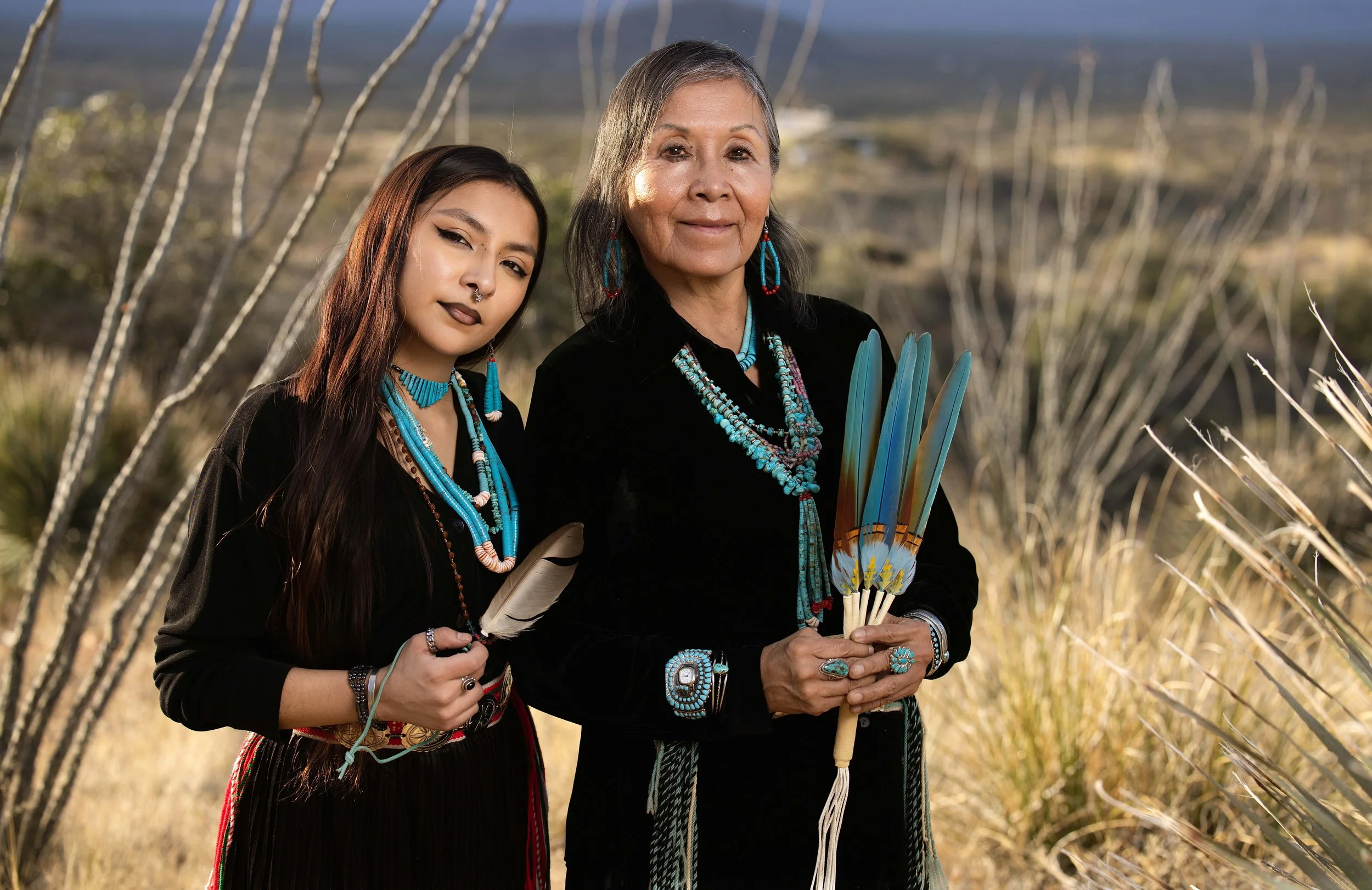
When Chucki speaks about her homeland near the Grand Canyon, her eyes fill with tears. The land is not scenery. It is memory. It’s her roots and her belonging. It’s where her grandmother taught her important Navajo traditions. Navajo traditions are passed down orally.
Albert Tester of the Sonoran Yaqui descent is her bass player. He brought his 1966 Chevy truck. Chucki smiled and called it a “Rez truck.” It reminded her of growing up on the reservation. In other words, it reminded her of home. The truck had character. It did not have working lights. We wrapped an hour before dark to make sure they could travel back safely.
Golden hour waits for no one. I wish I had had more time with them.
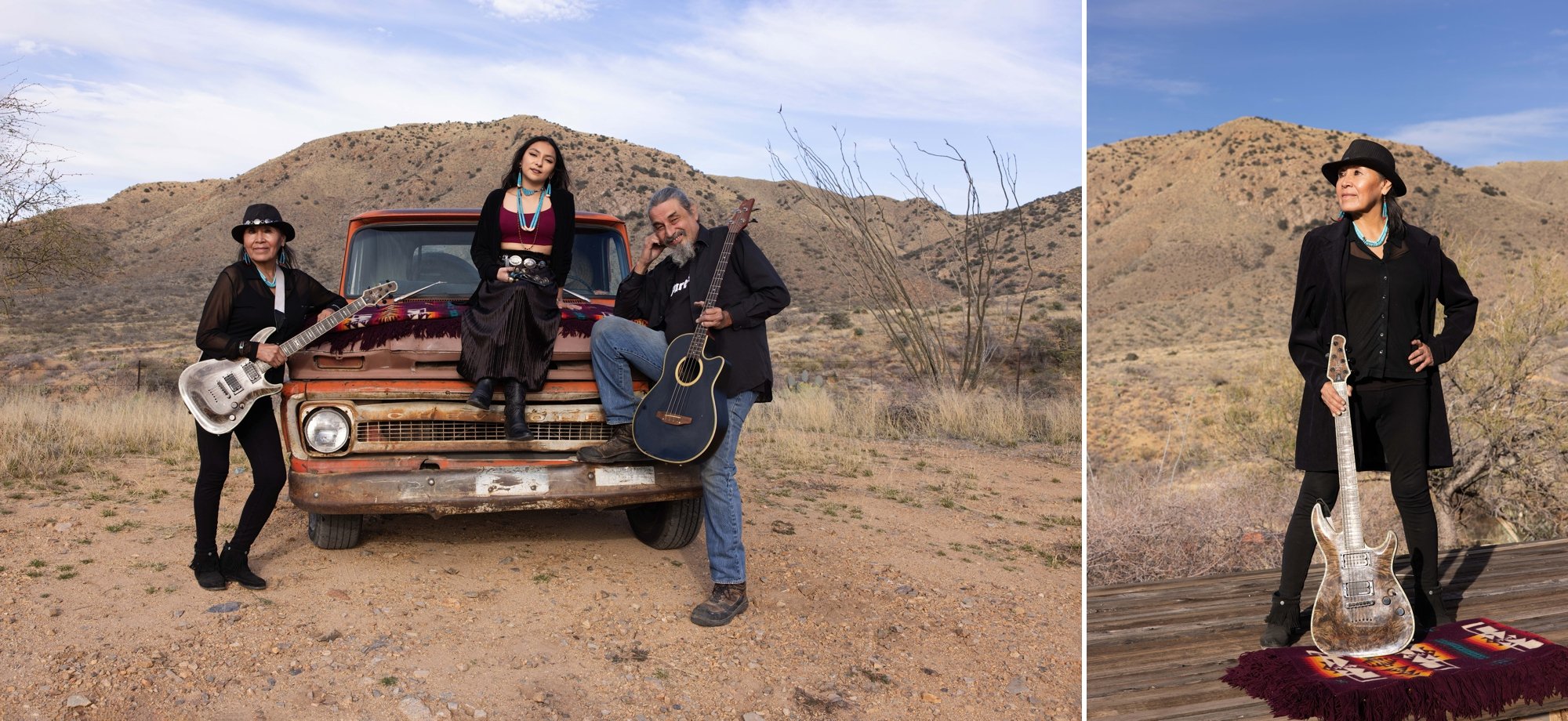
Sonoran Reign gathers around Albert’s 1966 Chevy truck, full of character and memories.
Chucki is partially blind. The terrain in the Land with No Name was uneven. I felt protective. She felt steady. She loved being back on open land. I later connected her with Kate, my residency director, so she could return to that land again.
At the end of our time together, Chucki gifted us two beaded necklaces. I stood there humbled and grateful.
The Diné Nation is the largest federally recognized Indigenous nation in the United States. Their history includes displacement, resilience, artistry, language preservation, and a deep cultural pride.
This series continues to stretch me. It is teaching me about land, lineage, trust, and what it means to stand fully in your place.
Chucki is an inspiration to all of us as she stands fully in hers.